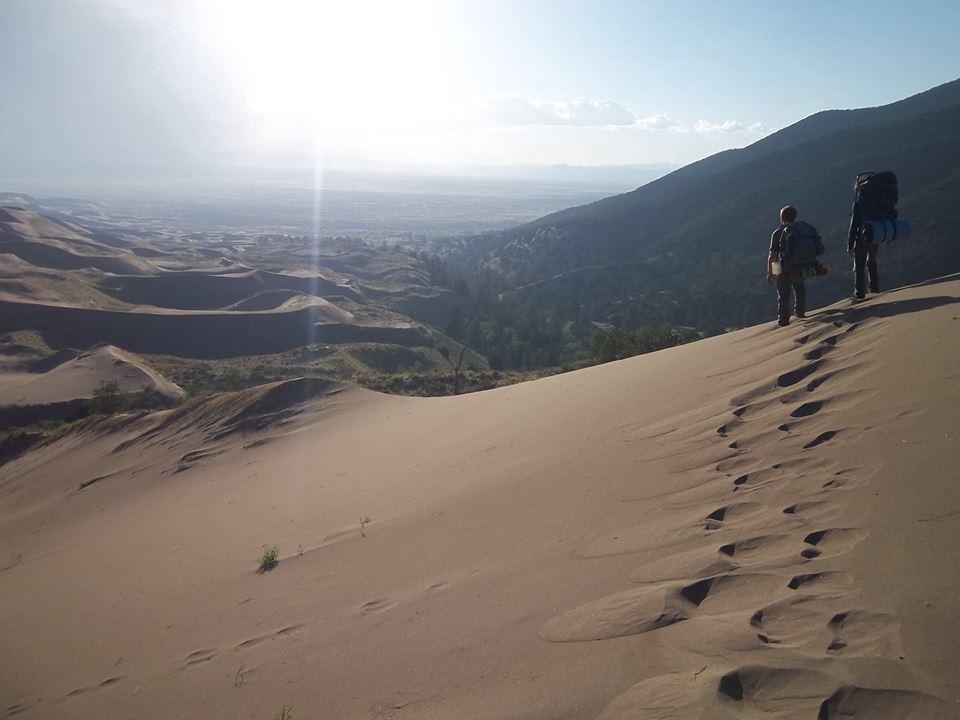
Backpacking in the dunes is a unique experience, with open views of the sky.
Photo: Kevin Winget
About
The most popular and unique backpacking option is camping in the 30-square-mile dunefield, beyond the major dune ridgeline (about 1.5 mile hike minimum over dunes). Enjoy wide open views of the starry sky or a bright moonlit night. Designated sites are also available in the trees of the foothills, or camping is available in higher forests of Great Sand Dunes National Preserve. Reserve national park backpacking permits for the dunes or foothills through recreation.gov
Campsites
Location
11999 State Highway 150
Visitor Center
Mosca, CO 81146
Fees
Reservations
Reserve national park backpacking permits through recreation.gov in advance up to the first day of your trip. Camping in the national preserve requires a free permit from the visitor center only if you are starting your trip in the national park.
Make a Reservation →Directions
To access the main park area, including the Dunes Parking Lot and backpacking trailheads, take CO Highway 150 from the south or County Road 6 from the west. Both are paved highways.
Weather
Spring can sometimes bring high winds, mainly in the afternoon. Temperatures may vary widely: highs may reach into the 70s F, or only into the 30s F with snow and an even colder wind chill. In summer, daytime high temperatures average 75-80 degrees F. However, sand surface temperatures can soar to 150 degrees F on sunny summer afternoons. Fall is generally mild, with Indian summer days. Highs average in the 60s - 70s F, with chilly nights in the 20s - 30s F. Frigid temperatures are the norm in winter.
Accessibility
Dunes wheelchairs are available for free checkout from the visitor center, but require pushing through soft sand. It is beyond the average person's strength to push another adult over the first high ridge of dunes to camp in the backcountry. Backpacking sites in the foothills are not wheelchair accessible.
Closest internet is in Alamosa, 40 miles southwest
Cell phone service is limited. A few carriers can reach the national park if you have line-of-sight with Alamosa.
Gas stoves only
0
RVs and trailers may park at trailheads for backpacking, but visitors may not sleep in them at trailheads.
0
0
Backpacking into the dunefield and forested sites requires hiking or horsepacking over rough, uneven terrain, soft sand, and elevations over 8,200 feet. Weather can change quickly in the Rocky Mountains. There are no restroom facilities in the backcountry.
0
Paved Roads - All vehicles OK
Primitive Camping Areas