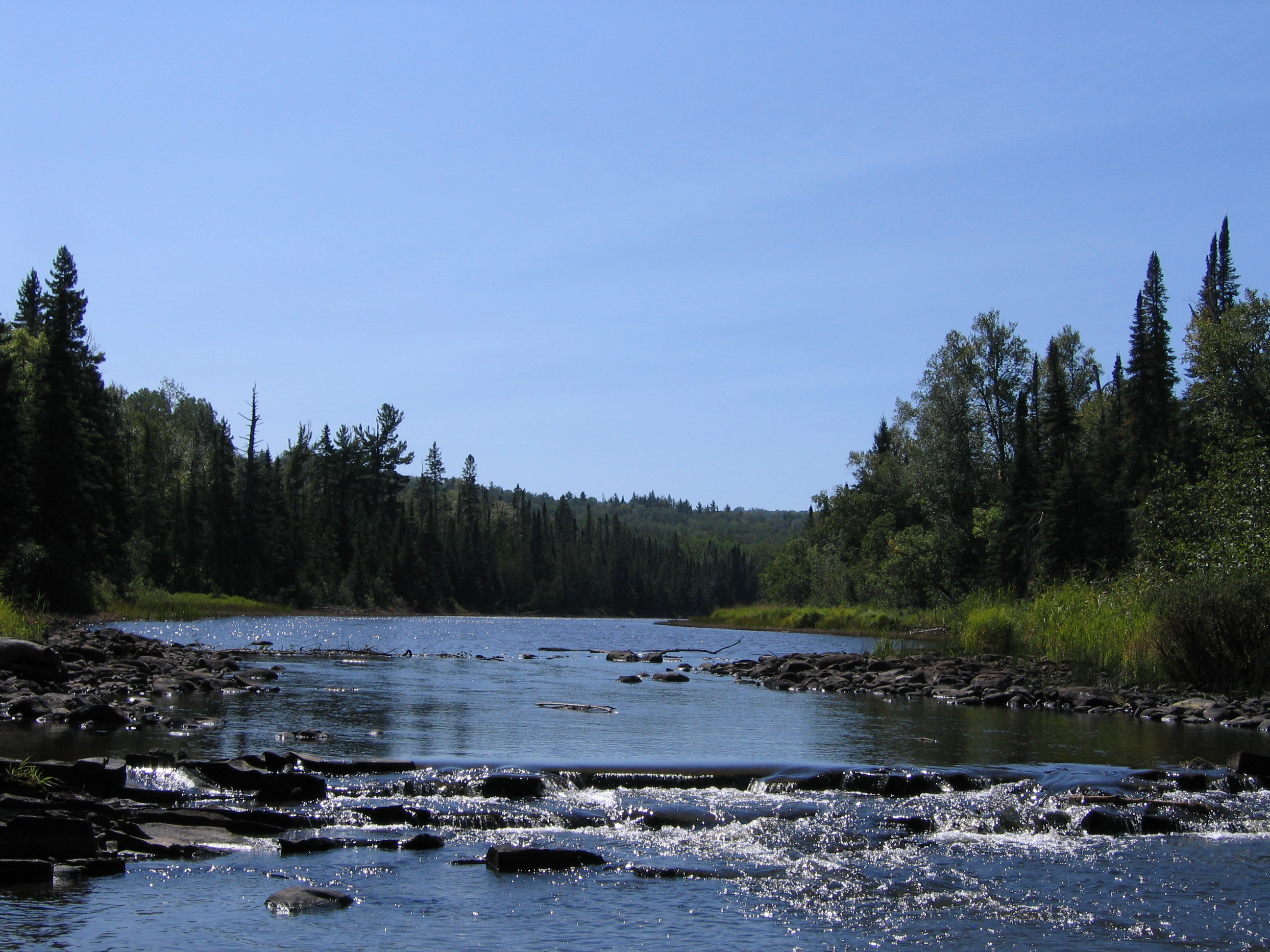
Serenity pervades the Pigeon River at Fort Charlotte.
Photo: NPS Photo
About
Two backcountry campsites, accessible to hikers and canoeists, are located at the Pigeon River (Canada/U.S. border) end of Grand Portage National Monument. Each campsite is limited to nine people. Camping permits are required and issued by the park. A permit system allows campers to reserve a campsite in advance. Allow a minimum of two weeks in advance for permit processing.
Campsites
Location
Grand Portage National Monument
170 Mile Creek Road
Grand Portage, MN 55605
Fees
Hours
The two Fort Charlotte backcountry Campsites are accessible to hikers and canoeists. There is a canoe landing on the Pigeon River and a wayside/information kiosk nearby.
Reservations
Camping at Grand Portage National Monument is limited to minimal impact (Leave No Trace) backcountry camping. There are two campsites acessible to hikers and canoeists. Each campsite is limited to 9 people. Camping permits are required. The permit system allows campers to reserve a campsite in advance. Careful planning is essential for a successful and enjoyable adventure on the Grand Portage Trail. Camping rules and regulations will be enforced.
Make a Reservation →Directions
Fort Charlotte is reached by canoeing down the Pigeon River from South Fowl Lake or hiking up the Grand Portage footpath from the historic depot/heritage center area on Grand Portage Bay of Lake Superior. An alternative entry to the Grand Portage footpath can be accessed by driving up County Road 17 to the trailhead where Old Highway 61 intersects the portage.
Weather
Short, warm summers and long, cold winters define the climate of northern Minnesota. Average range of summer temperature is from 55°F to 78°F in July and average range of winter temperatures is from –11°F to 12°F in January. In Grand Portage on the shore of Lake Superior, precipitation is typically 26 to 29 inches annually but higher in the interior highlands nearer the Fort Charlotte side of the Grand Portage footpath. For more information go to: http://www.nps.gov/grpo/planyourvisit/weather.htm
Accessibility
These backcountry campsites are not wheelchair accessible.
no cell service
Campfires must be built in fire rings/grills where provided. Burn only dead, fallen wood. Cutting of standing (living or dead) trees is prohibited. Open fires will be prohibited during times of high fire danger. Any remnants of a fire must be extinguished, cold to the touch, free of litter with no evidience of food remains that could attract animals. The use of portable camp stoves is permitted in designated campsites.
0
These backcountry campsites are not RV & Trailer accessible.
0
Quiet hours - In order to insure a quality camping experience, quiet hours are enforced from 10 P.M. to 6 A.M. Ground Disturbance - Do not dig or disrupt the topsoil. Tent floors - There are two wooden tent platforms in each campsite. Please use them when available. Garbage and Waste - Visitors must be prepared to carry their refuse out of the park. Do not dispose of garbage in toilets, bury it or throw it in the river. Pets - Pets are best left at home. Dogs must be on leash, no longer than 6 feet in length. Pet excrement must be removed if it is within 200 feet of the trail, campsite or water.
0
These backcountry campsites are not ADA accessible.
0
No Roads
Primitive Camping Areas