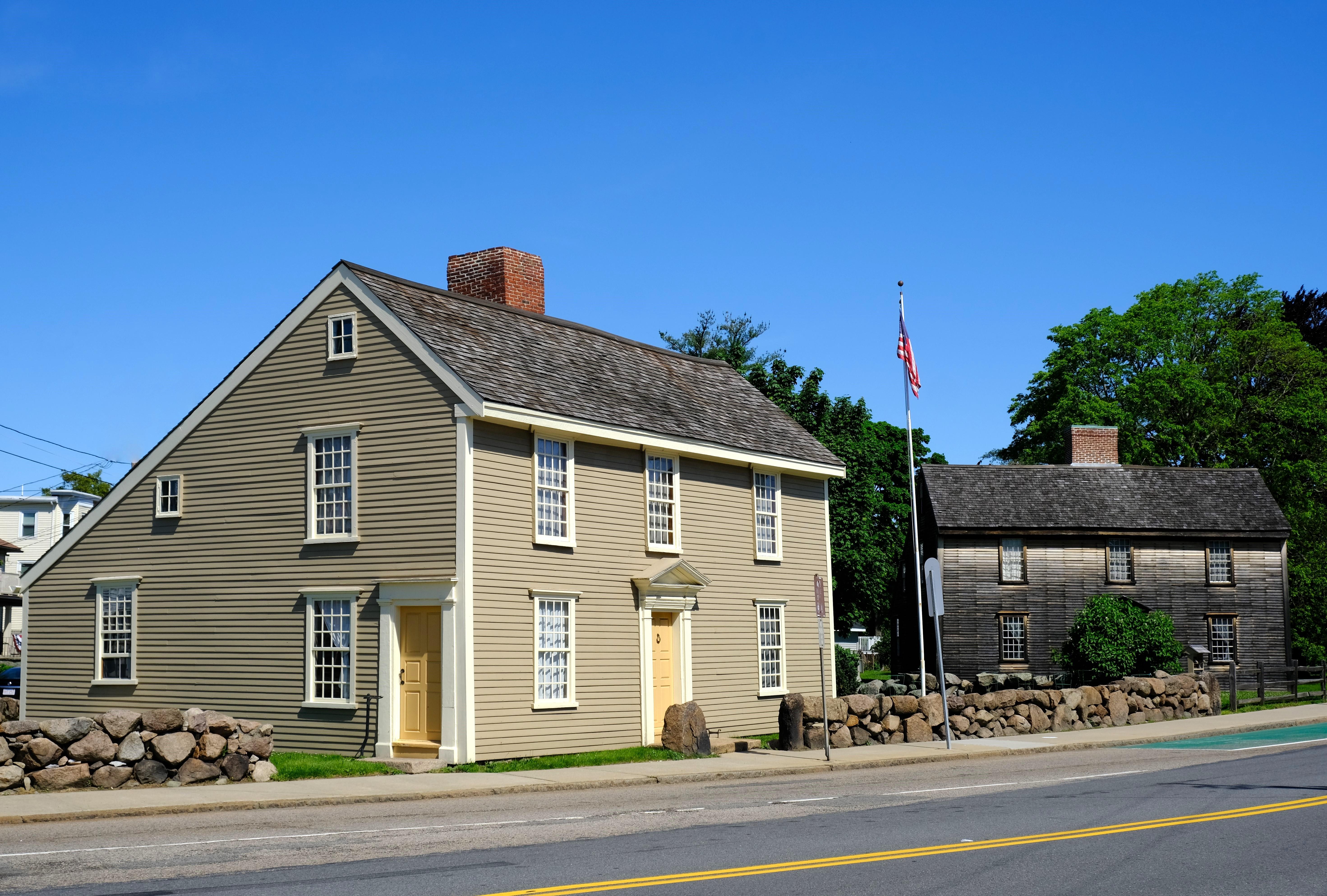
The Birthplaces of John and John Quincy Adams sit right next to each other on Franklin Street.
Photo: NPS Photo
About
From the sweet little farm at the foot of Penn’s Hill to the gentleman’s country estate at Peace field, Adams National Historical Park is the story of “heroes, statesmen, philosophers…and learned women” whose ideas and actions helped to transform thirteen disparate colonies into one united nation.
Activities
Guided ToursSelf-Guided Tours - WalkingLiving HistoryFirst Person InterpretationJunior Ranger ProgramPark FilmShoppingBookstore and Park Store
Directions
Traveling on U.S. Interstate 93, take exit 7 - Route 3 South to Braintree and Cape Cod. Take the first exit off Route 3 south - exit 42. Follow signs toward Quincy Center. Continue straight on Burgin Parkway through seven traffic lights. At the eighth traffic light, turn right onto Dimmock Street. After one block, turn right onto Hancock Street. The National Park Service Visitor Center, located at 1250 Hancock Street, is on your left. Validated parking is in the Presidents Place garage, 44 Saville Avenue.
Get directions →