Explore Parks
All ParksExploreActivitiesAlertsNewsroom
This site was made with love by Ben Myatt|API
National Park

Bryce Canyon National Park

DangerFeb 26, 2026

Navajo Loop Trail Closed

View →
Park ClosureJan 6, 2026

Winter Season Closures

View →
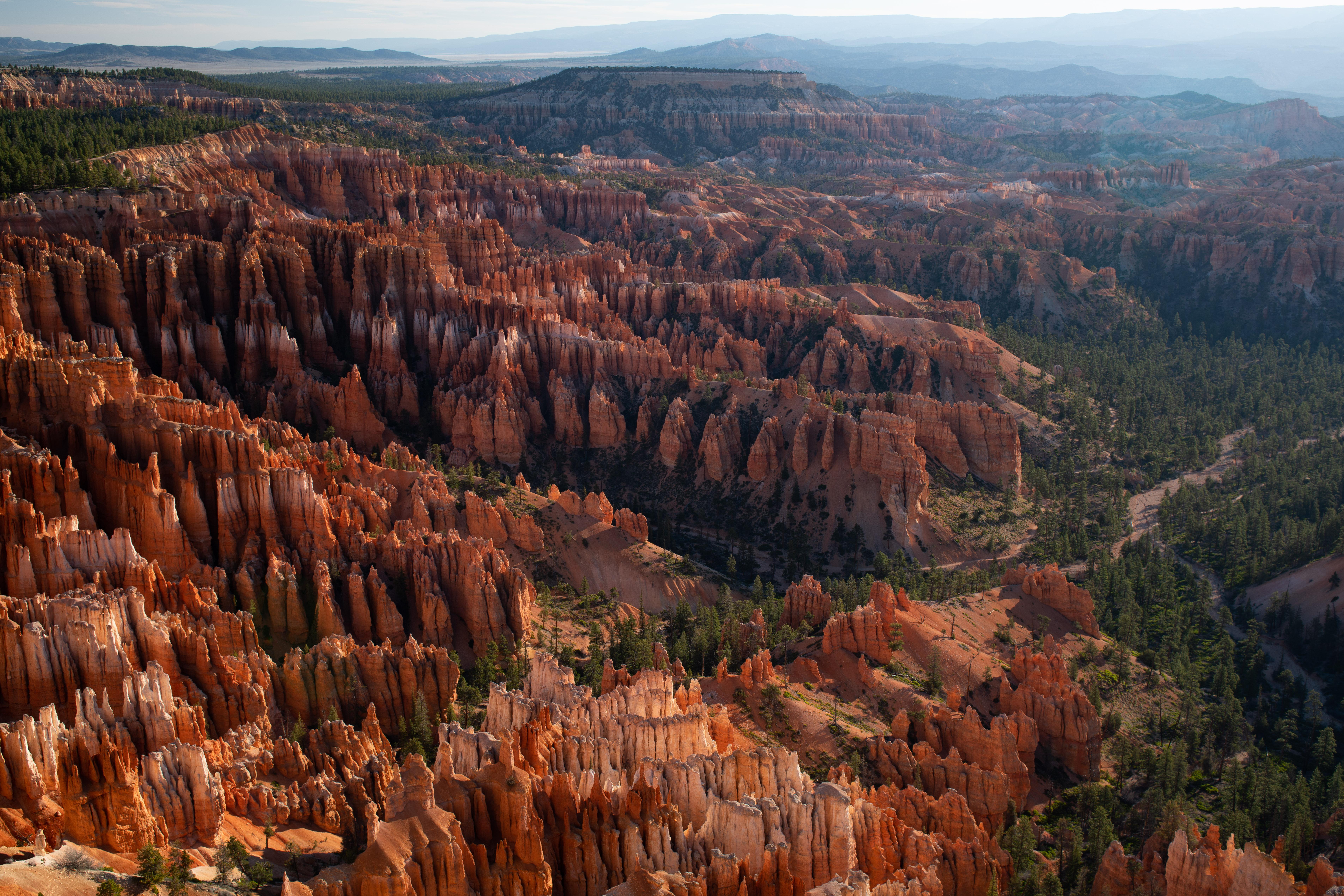
A red rock landscape and plateau forest glows with the morning sun

Viewpoints of the iconic Bryce Amphitheater are located along the first 3 miles of the park road and are a popular destination at sunrise.

Photo: NPS Photo / Peter Densmore

About

Hoodoos (irregular columns of rock) exist on every continent, but here is the largest concentration found anywhere on Earth. Situated along a high plateau at the top of the Grand Staircase, the park's high elevations include numerous life communities, fantastic dark skies, and geological wonders that defy description.

Activities

AstronomyStargazingBikingRoad BikingCampingBackcountry CampingCar or Front Country CampingGroup CampingRV CampingFoodDiningPicnickingGuided ToursSelf-Guided Tours - Auto
Hands-On
Citizen Science
Hiking
Backcountry Hiking
Front-Country Hiking
Horse Trekking
Junior Ranger Program
Skiing
Cross-Country Skiing
Snowshoeing
Wildlife Watching
Birdwatching
Park Film
Museum Exhibits
Shopping
Bookstore and Park Store

Directions

From the North: Take I-15 south to UT-20 (exit 95). Travel east on UT-20 to US-89. Follow US-89 south to UT-12. Travel east on UT-12 to UT-63. Take UT-63 south to Bryce Canyon NP. From the South through Zion National Park: Take I-15 north to UT-9 (exit 16). Follow UT-9 east through Zion National Park to US-89. Travel north on US-89 to UT-12. Go east on UT-12 to UT-63. Take UT-63 south to Bryce Canyon NP. From the East Travel west on UT-12 to UT-63. Take UT-63 south to Bryce Canyon NP.

Get directions →

Weather

Due of its high elevation climate, weather at Bryce Canyon through autumn, winter, and spring can be highly variable. From October to May temperatures fall below freezing nearly every night. The park typically experiences its coldest and snowiest periods from December through February. Spring storms in March and April can still produce heavy snowfall that may impact travel in the region. Summer highs are typically in the 70s-80s F and afternoon thunderstorms are common in July and August.

News

Dec 10, 2025

Pile burns planned in Bryce Canyon National Park

Bryce Canyon National Park fire managers plan to conduct pile burning operations this winter and early spring as conditions allow. These pile burns are part of a 55-acre fuel reduction project to minimize wildfire risk and protect park infrastructure, in accordance with the park’s fire management plan. 

Entrance Fees

Entrance - Private Vehicle$35.00
Entrance - Motorcycle$30.00
Entrance - Per Person$20.00
Commercial Entrance - Sedan$50.00