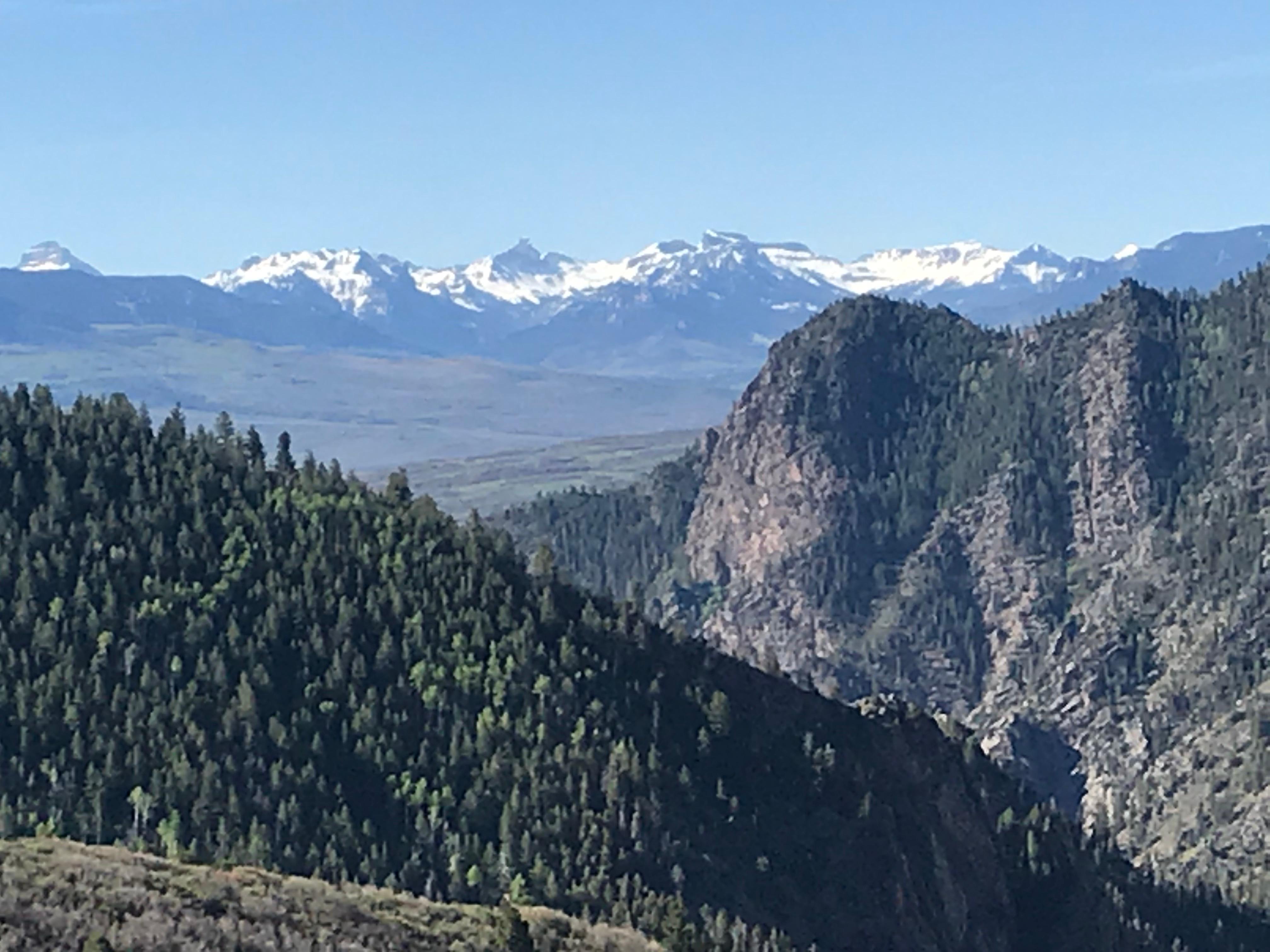
The snow-capped San Juan Mountain Range looms in the distance as viewed from the Crystal Trail
Photo: NPS image by Matt Johnson
About
Three reservoirs and surrounding lands make up this recreation area in western Colorado. It is a landscape of tradeoffs; natural and human made features exist together. Geologic wonders are abundant from the sagebrush shrublands to forests. Visitors can experience the park year-round on both land and water.
Activities
AstronomyStargazingBoatingMotorized BoatingSailingJet SkiingCampingBackcountry CampingCanoe or Kayak CampingCar or Front Country CampingHorse Camping (see also Horse/Stock Use)Group CampingRV CampingClimbingRock ClimbingFishingFreshwater Fishing
Directions
Curecanti is located between the Colorado towns of Gunnison (to the east), Montrose (to the west), and Lake City (to the south). The West Elk Mountain Wilderness area borders Curecanti to the north. U.S. Highway 50 runs the length of Curecanti east to west.
Get directions →Weather
During spring and fall, temperatures range from 44°F to 70°F (7°C to 34°C) with overnight lows from the teens to about freezing (-9°C to 2°C). In summer, temperatures are usually in the 70°F to 80°F (21°C to 27°C). Nights are usually 40°F to 50°F (4°C to 10°C). The wind often picks up at 12 pm and continues through the afternoon. Thunderstorms are common. In winter, temperatures usually reach 20°F to 30°F (-7°C to -1°C) and lows often dip below zero (-18°C).
News
Sep 18, 2026
East Portal Road reopens after weather related closure
East Portal Road, managed by the U.S. Bureau of Reclamation, will reopen on Saturday, September 19, 2026, by 8:00 a.m. The road was closed on September 14 following forecasts of significant rainfall in the region, which increased the risk of mudslides.
Sep 18, 2026
Tobin Roop selected as superintendent of Black Canyon of the Gunnison National Park and Curecanti National Recreation Area
The National Park Service has selected Tobin Roop as superintendent of Black Canyon of the Gunnison National Park and Curecanti National Recreation Area. Roop brings 24 years of National Park Service experience in leadership, resource management, park operations, partnerships and major project management.
Sep 17, 2026
Fire Restrictions Lifted at Black Canyon and Curecanti
Thanks to recent significant rainfall, the Stage 1 Fire Restriction Order for Black Canyon of the Gunnison National Park and Curecanti National Recreation Area will be lifted effective Friday, September 18, 2026, at 12:01 a.m.