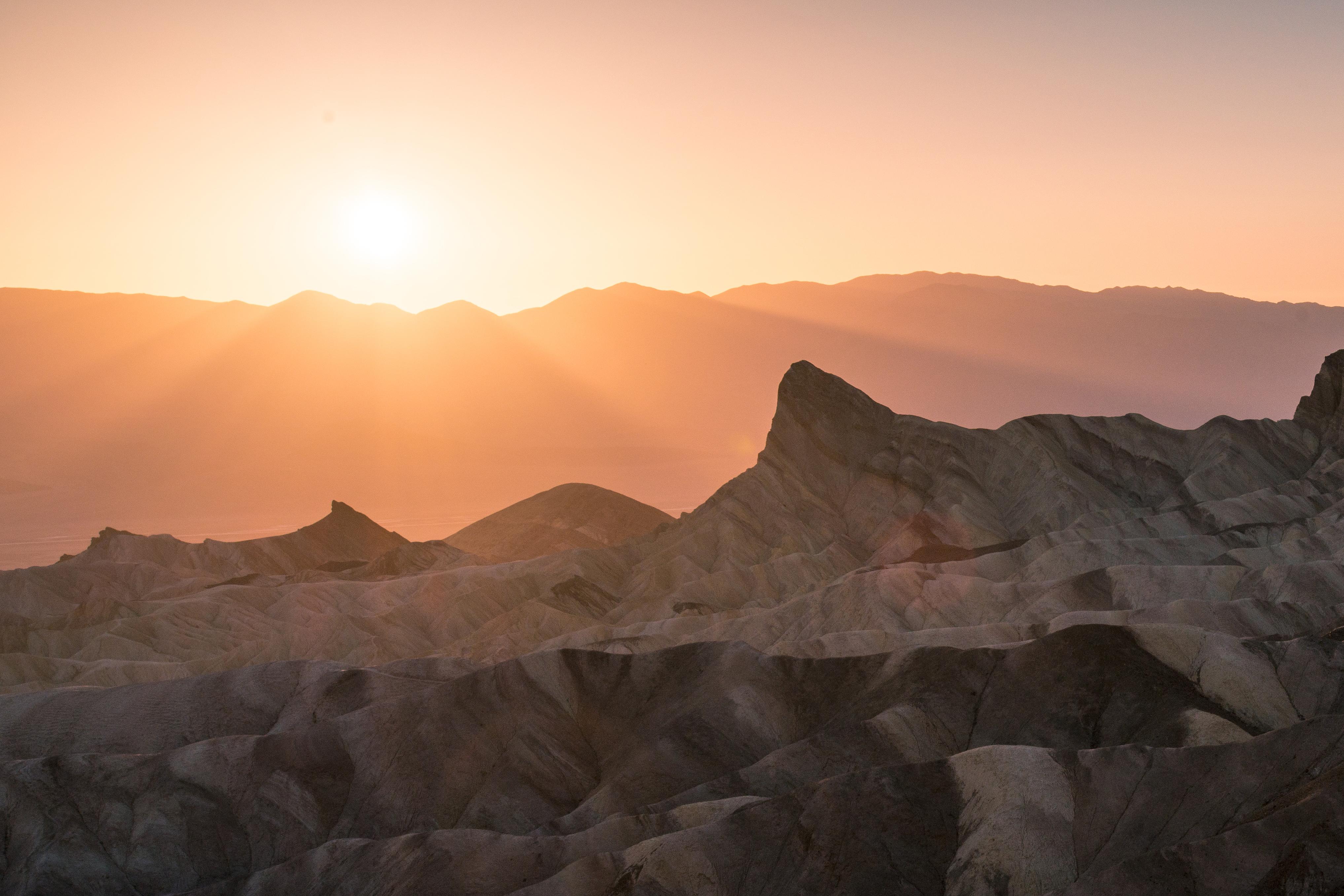
The warm light of sunset covers the badlands at Zabriskie Point.
Photo: Ronald Gaddis
In this below-sea-level basin, steady drought and record summer heat make Death Valley a land of extremes. Yet, each extreme has a striking contrast. Towering peaks are frosted with winter snow. Rare rainstorms bring vast fields of wildflowers. Lush oases harbor tiny fish and refuge for wildlife and humans. Despite its morbid name, a great diversity of life thrives in Death Valley.
There are multiple entrances to the park. Click below to learn the best ways to travel to Death Valley.
Get directions →SPRING is the most popular time to visit Death Valley. Warm and sunny days with the possibility of spring wildflowers is a big attraction. SUMMER starts early in Death Valley. By May the valley can be scorching hot. AUTUMN arrives in late October, with warm but pleasant temperatures and generally clear skies. WINTER has cool days, chilly nights and rarely, rainstorms. With snow capping the high peaks and low angled winter light, this season is especially beautiful for exploring the valley.
Salt Creek Boardwalk Reopens
Death Valley National Park is pleased to announce the reopening of Salt Creek Boardwalk, three and a half years after it was destroyed by flooding. This wheelchair-accessible trail provides easy access to view Salt Creek Pupfish.

Death Valley National Park reopens South Badwater Road
The National Park Service has reopened South Badwater Road as of Jan. 31 following months of closures due to extensive flash flood damage.
Death Valley National Park and Timbisha Shoshone Tribe Celebrate 25th anniversary of Homeland Act
Death Valley National Park, in partnership with the Timbisha Shoshone Tribe, will host a special event on Jan. 30 to commemorate the 25th anniversary of the Timbisha Shoshone Homeland Act.