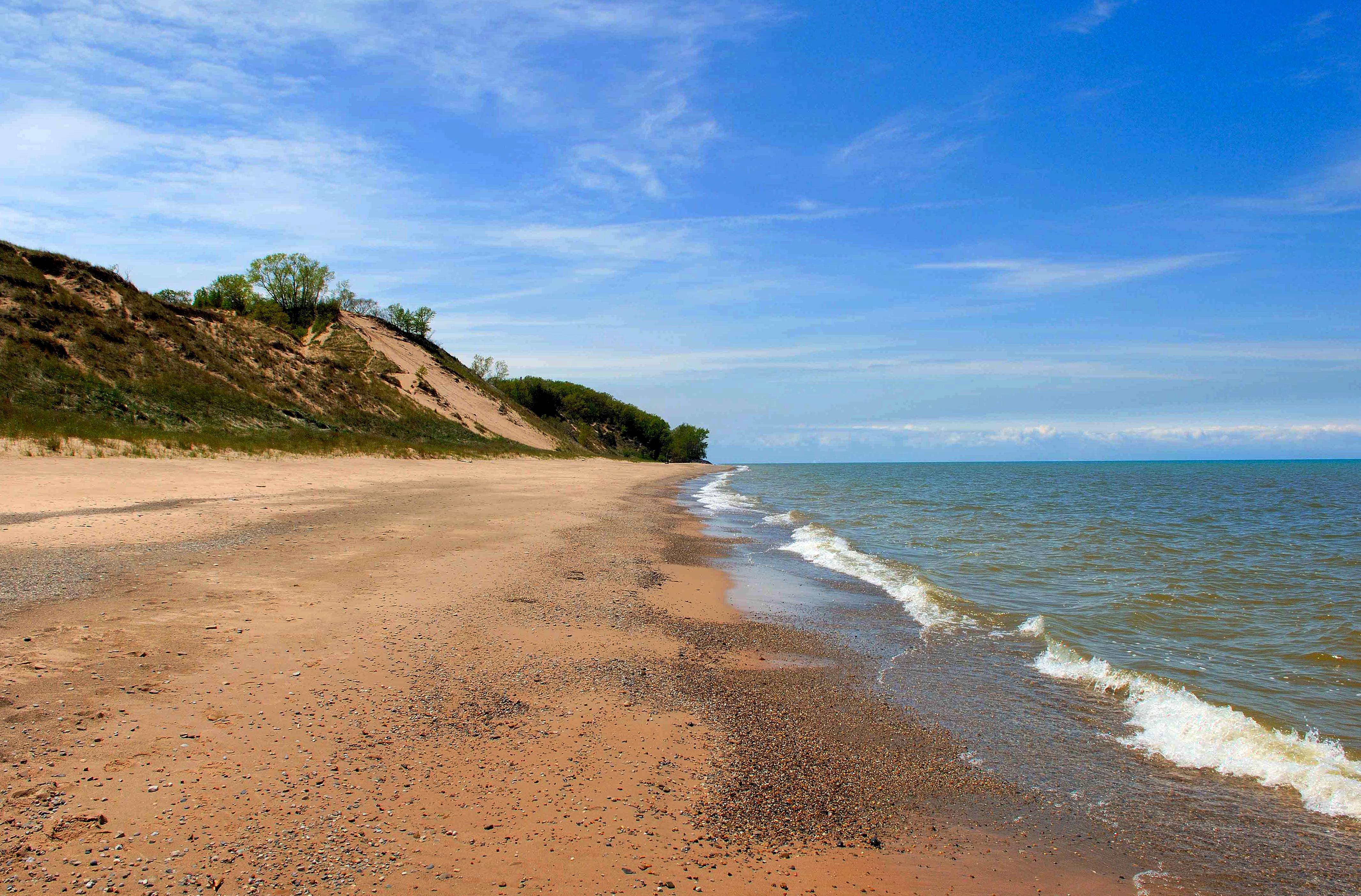
Central Avenue Beach at low water levels, spring 2006.
Photo: NPS Photo
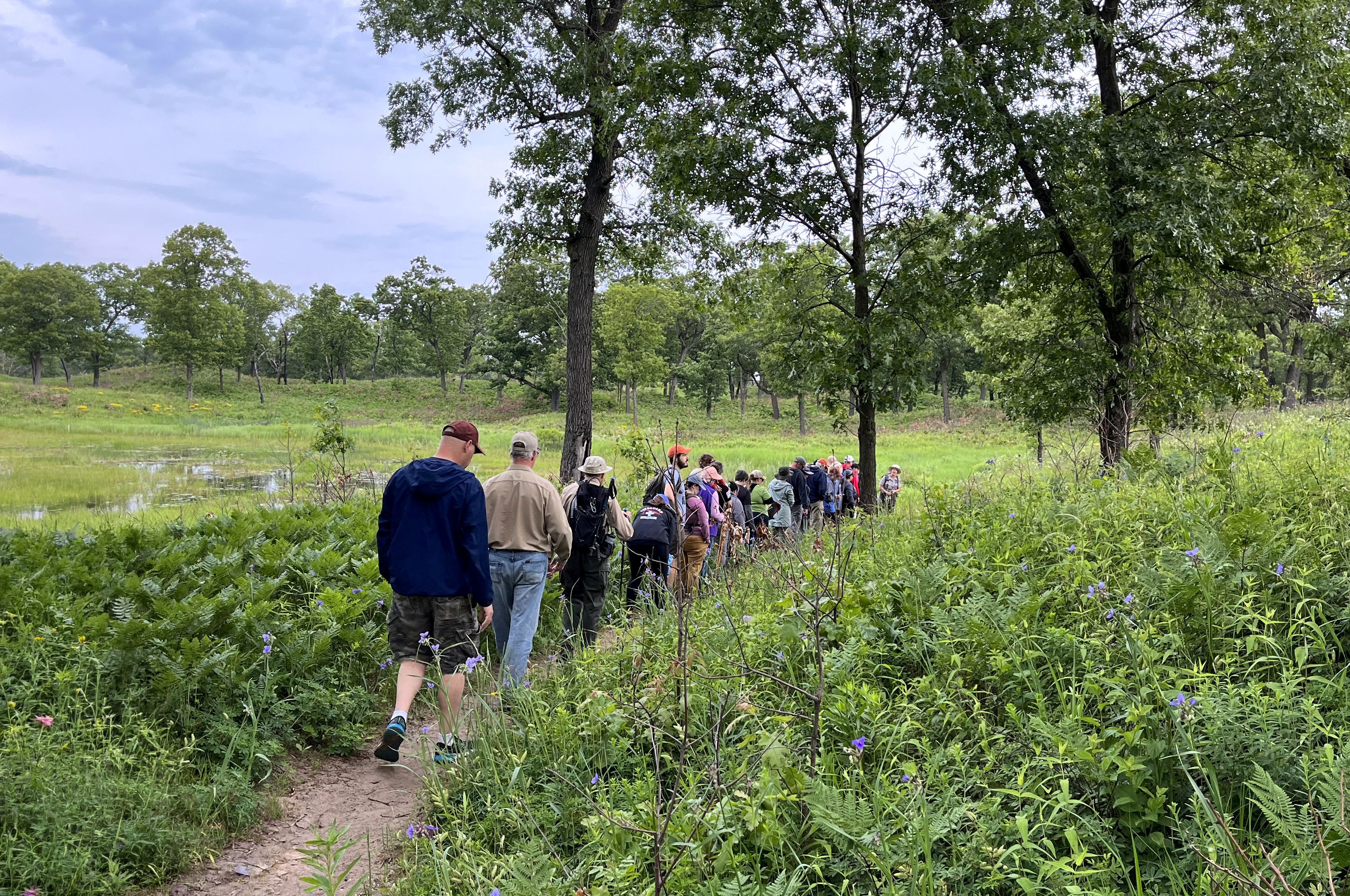
Lake Michigan's might has influenced Indiana Dunes for millennia. Wind and waves have shaped the land, leaving a rich mosaic of habitats along these 15 miles of Indiana coast. Over 50 miles of trails lead through shifting sand dunes, quiet woodlands, sunny prairies and lush wetlands. Known for its striking plant and bird diversity, it's easy to find inspiration throughout the park’s 16,000 acres.
Visitors can access the national park via Interstate 94, the Indiana Toll Road (Interstate 80/90), U.S. Highway 12, U.S. Highway 20, Indiana State Road 49, and various other local roads. The Indiana Dunes Visitor Center is located on Indiana State Road 49, between U.S. Highway 20 and Interstate 94 (1215 IN-49, Porter, IN 46304). For a driving map to the Indiana Dunes Visitor Center or other locations, check out our maps page.
Get directions →On average, the warmest month is July and the highest recorded temperature was 105F in 1934. The coolest month is January, with the lowest recorded temperature of -25F in 1985. June sees the most precipitation with an average rainfall of 4.66 Inches.
Mount Baldy Access Site Reopens After Sand Management Project
MICHIGAN CITY, Ind. — Indiana Dunes National Park will reopen the Mount Baldy access site to the public Monday, June 15. The U.S. Army Corps of Engineers recently completed work to move approximately 27,000 tons of sand at Mount Baldy as part of ongoing shoreline management efforts.
Spring Prescribed Fires Planned for Indiana Dunes National Park
The National Park Service plans to conduct eight prescribed fires this Spring starting Monday, Feb. 28.