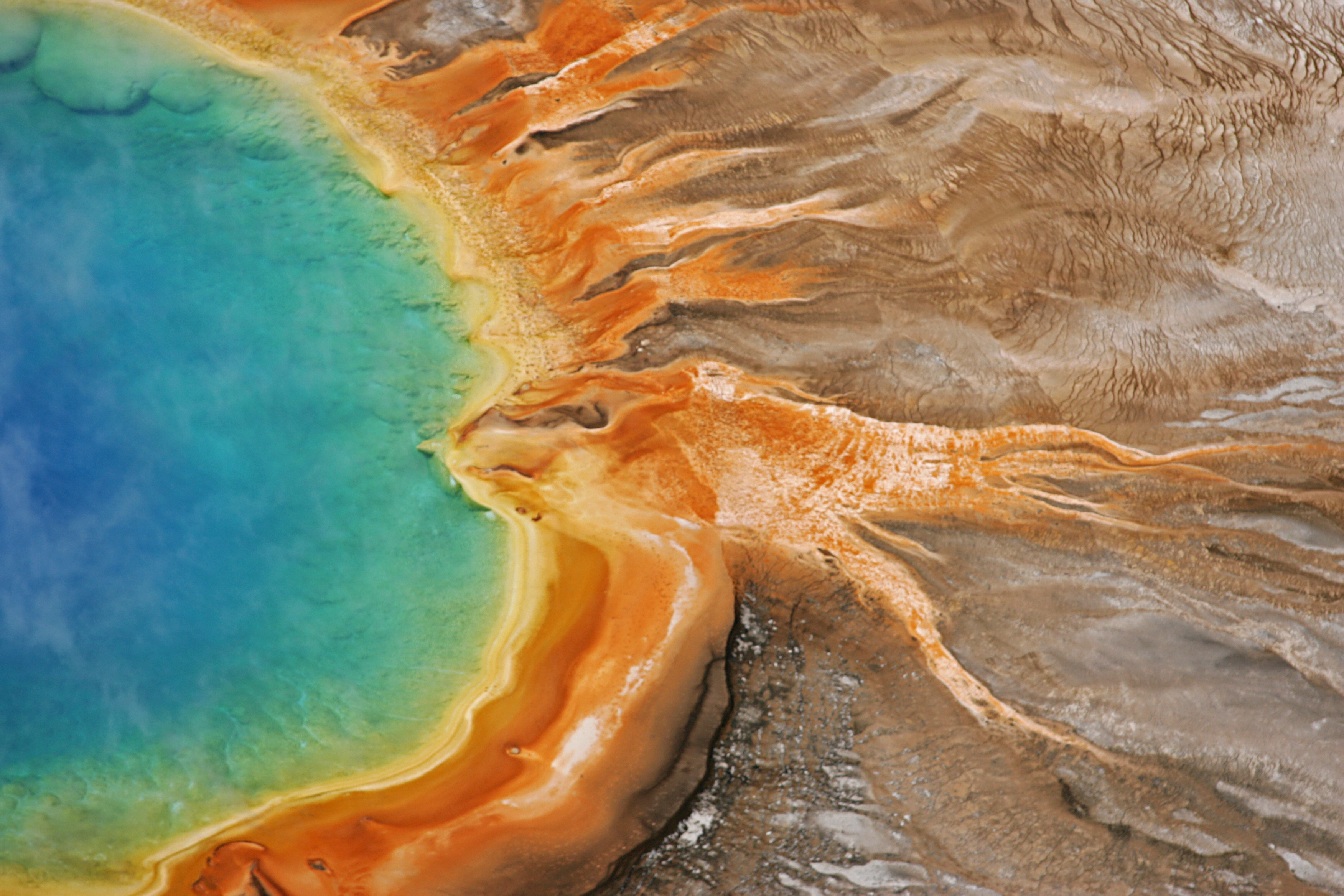
The bright colors found in Grand Prismatic Spring come from thermophiles—microorganisms that thrive in hot temperatures
Photo: NPS/Jim Peaco
On March 1, 1872, Yellowstone became the first national park for all to enjoy the unique hydrothermal wonders. Today, millions of people come here each year to camp, hike, and enjoy the majesty of the park.
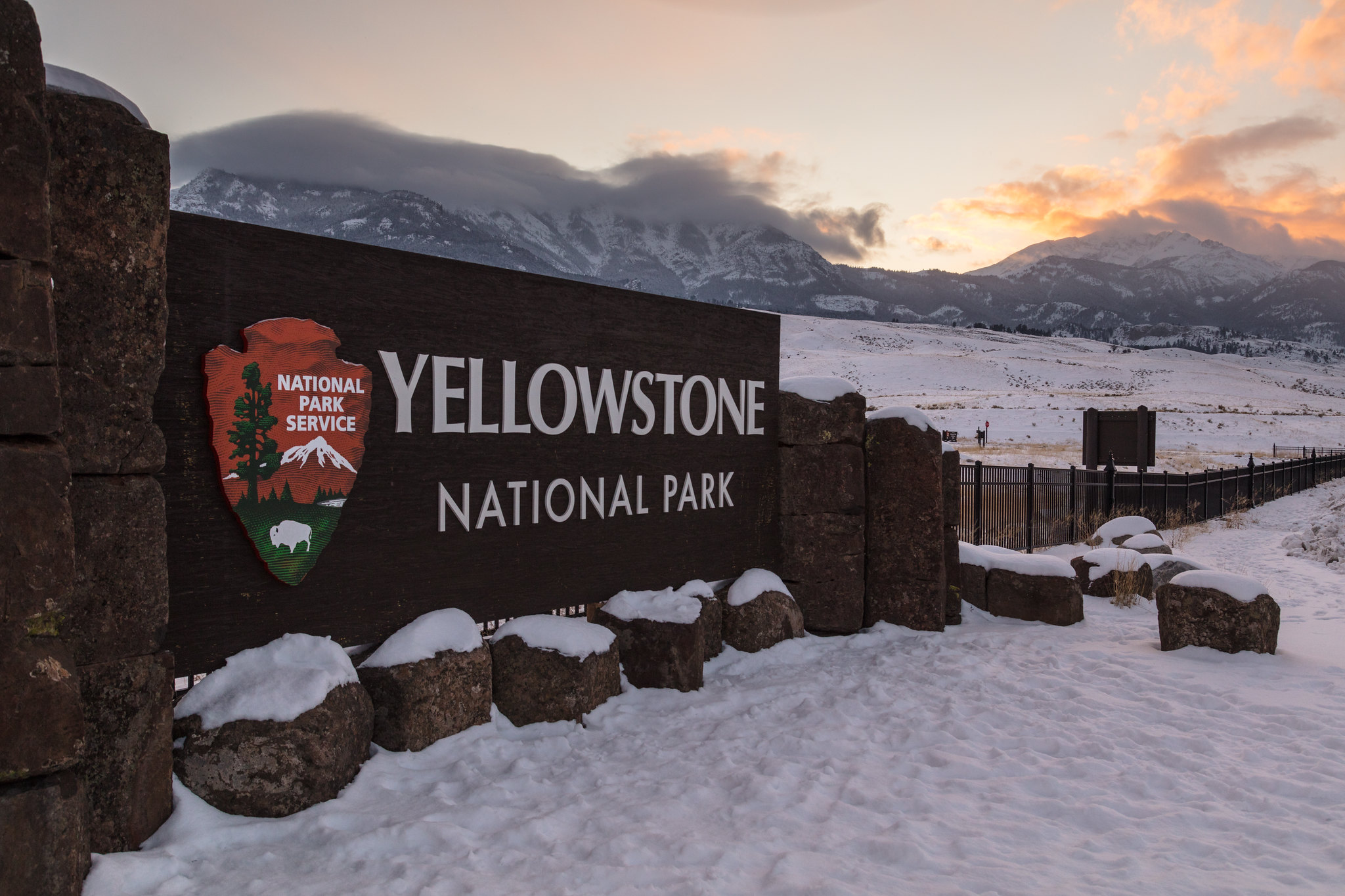
Yellowstone National Park covers nearly 3,500 square miles in the northwest corner of Wyoming (3% of the park is in Montana and 1% is in Idaho). Yellowstone has five entrance stations, and several are closed to regular vehicles during winter. It takes many hours to drive between these entrances, so be sure to check the status of roads at the entrance you intend to use while planning your trip and before you arrive.
Get directions →Yellowstone's weather can vary quite a bit, even in a single day. In the summer, daytime highs can exceed 70°F (21°C), only to drop 20 or more degrees when a thunderstorm rolls through. It can snow during any month of the year, and winter lows frequently drop below 0°F (-18°C), especially at night. Bring a range of clothing options, including a warm jacket and rain gear, even in the summer.

Yellowstone visitor injured by bison encounter
A 12-year-old visitor was injured by a bison in Yellowstone National Park on June 26 at approximately 9:15 a.m.

Tips for visiting Yellowstone National Park this Fourth of July
If you plan to visit Yellowstone National Park this Fourth of July, plan ahead to protect yourself and this wild and awe-inspiring place. Summer is the busiest time in the park, so please pack your patience. Expect crowds at popular areas and lines at entrance stations, construction areas, and roadside wildlife sightings.

Body of kayaker found on Yellowstone Lake in Yellowstone National Park
On the morning of June 8, occupants of a vessel on Yellowstone Lake discovered the body of a 41-year-old male, Brandon Rhea of Denver, Colorado, floating in the water near Rock Point on the northwest shore of the lake near Bridge Bay.