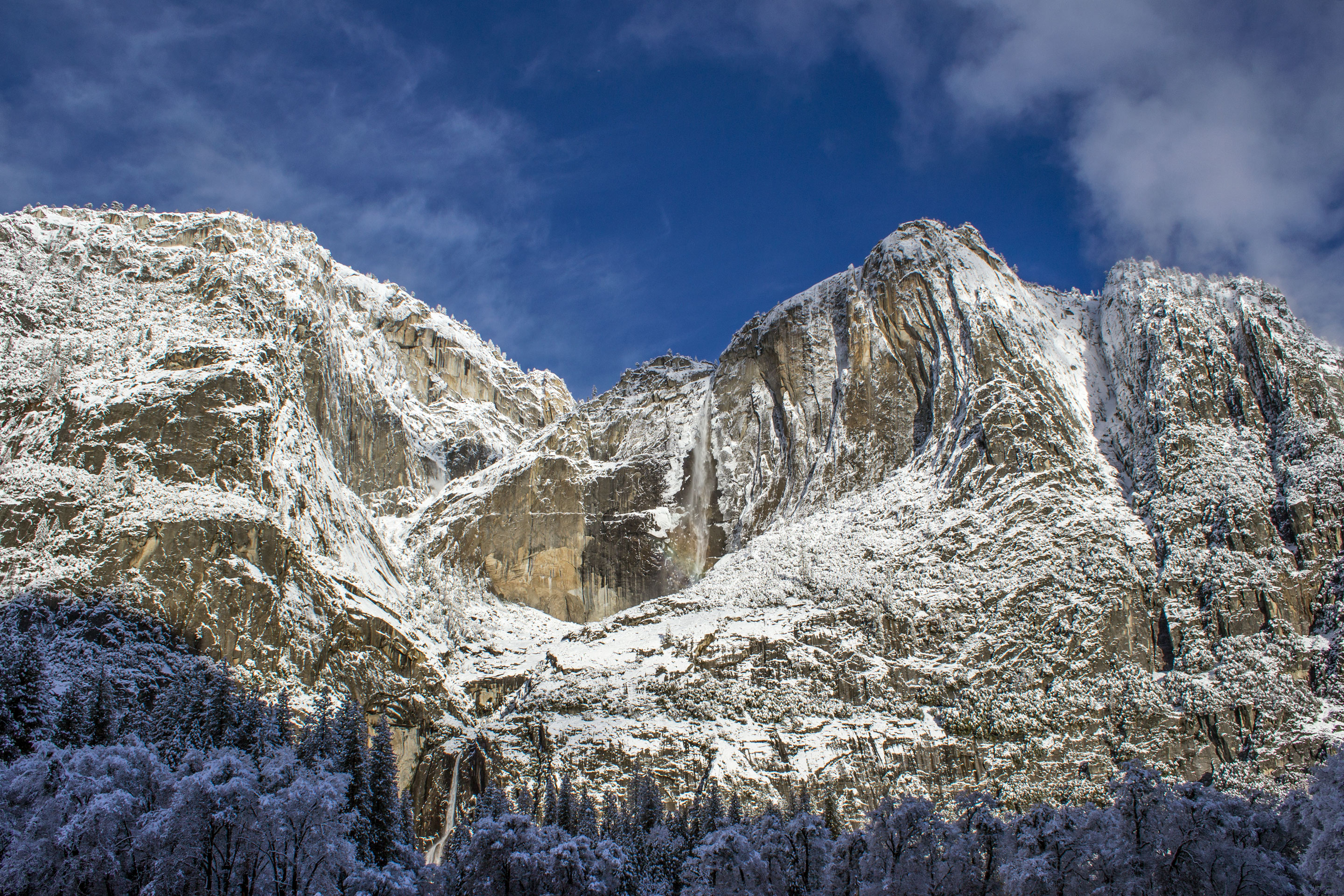
Yosemite Falls will sometimes only trickle at the end of summer, but wet winters can rejuvenate the flow.
Photo: NPS / Cindy Jacoby
Not just a great valley, but a shrine to human foresight, the strength of granite, the power of glaciers, the persistence of life, and the tranquility of the High Sierra. First protected in 1864, Yosemite National Park is best known for its waterfalls, but within its nearly 1,200 square miles, you can find deep valleys, grand meadows, ancient giant sequoias, a vast wilderness area, and much more.
You can drive to Yosemite year-round and enter via Highways 41, 140, and 120 from the west. Tioga Pass Entrance (via Highway 120 from the east) is closed from approximately November through late May or June. Hetch Hetchy is open all year but may close intermittently due to snow. Please note that GPS units do not always provide accurate directions to or within Yosemite.
Get directions →Yosemite National Park covers nearly 1,200 square miles (3,100 square km) in the Sierra Nevada, with elevations ranging from about 2,000 feet (600 m) to 13,000 ft (4,000 m). Yosemite receives 95% of its precipitation between October and May (and over 75% between November and March). Most of Yosemite is blanketed in snow from about November through May. (Yosemite Valley can be rainy or snowy in any given winter storm.)

Fire Update for August 13, 2026
There are eight new wildfire starts in Yosemite National Park, all attributed to early morning lightning on August 12, 2026. No site closures or evacuations have been implemented at the time of this update.
Yosemite National Park Implements Fire Restrictions Due to Increased Fire Danger
Effective at 12:01 a.m. local time on Friday, Aug. 7, 2026, Yosemite National Park will implement fire restrictions throughout the park below 8,000 feet in elevation. The restrictions are in place to reduce the risk of human-caused wildfires and will remain in effect until rescinded.
Yosemite National Park Releases Mist Trail Corridor Environmental Assessment for Public Review
Yosemite National Park has released the Mist Trail Corridor Environmental Assessment (EA) for public review and comment. The project proposes improvements to one of the most heavily visited and iconic trail corridors in the National Park System.