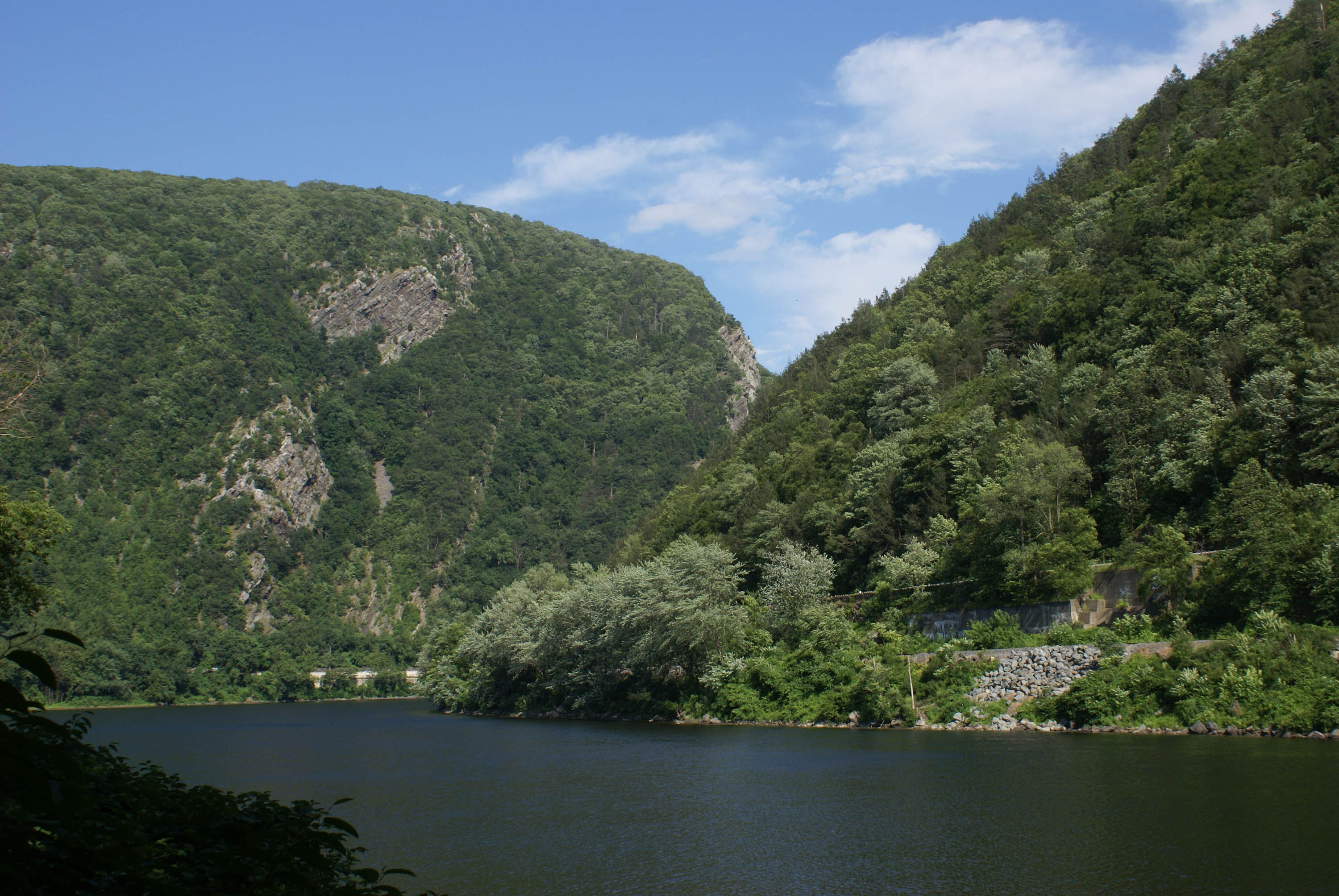
The Delaware Water Gap is the geologic formation that gives the park its name. This distinctive cut thru the Kittatinny ridgeline was made by the Delaware River over thousands of years.
Photo: Courtesy of James Hicks
Situated within the most densely populated region of the United States, Delaware Water Gap National Recreation Area provides a unique opportunity to experience tranquil landscapes, rich human history, and striking scenery along 40 miles of the longest free-flowing river east of the Mississippi. The park offers year-round recreation including hiking, paddling, fishing, and hunting.
Delaware Water Gap National Recreation Area is a long, narrow park that sits between two major interstates, I-80 at the south and I-84 at the north. US 209 is the main north/south road through the park on the Pennsylvania side and Old Mine Road is the main north/south road though the park on the New Jersey side.
Get directions →Spring: Temperatures usually range from lows of 26 F to highs of 80 F with average rainfall of 5 inches. Summer: Temperatures usually range from lows of 55 F to highs of 85 F with average rainfall of 4 inches. Fall: Temperatures usually range from lows of 30 F to highs of 83F. Fall foliage is at its peak sometime in October as daily mountain temperatures vary frequently and influence the change. Winter: Temperatures usually range from lows of 15 F to highs of 49 F.
NPS Announces Implementation of Winter Service Levels, Plowing Priorities
Delaware Water Gap National Recreation Area will implement typical winter service levels. During annual low staff seasons, the park takes this action to ensure visitor safety. Information on sites that will remain open, receive no winter maintenance, or close until spring outlined.
Tourism to Delaware Water Gap National Recreation Area contributes $211 million to local economy
A new National Park Service report shows that 4.1 million visitors to Delaware Water Gap National Recreation Area in 2024 spent $164 million in communities near the park. That spending had a cumulative benefit to the local economy of $211 million.